Showing posts with label Story. Show all posts

Saturday, April 10, 2021

Week 10 Story: Rabbit and Terrapin, Two Tricksters

Author's Note. The African American folktales collected by Joel Chandler Harris in the late 19th century are one of our most important sources for African folktales told in the United States, specifically in Georgia, where Harris collected stories from former slaves. Although slave owners did their best to eradicate African cultural traditions among the slaves, the stories persisted. Stories from many different African cultures came together in new ways, and there was also back-and-forth sharing of stories with Native American storytellers. The trickster "Brer Rabbit" is the main character in the stories Harris collected, but the trickster "Brer Terrapin" (turtle) also appears in many stories; the word terrapin is itself a Native American name for the turtle (Wiktionary). For this experiment, I decided to look at the stories that features both Rabbit and Turtle to see what happens. Most of the time, they cooperate! Although in one famous story, they compete. Here are some of those stories told in 100 words.

Turtle in the Sack

Fox caught Turtle and put him in a sack. "Turtle-soup for supper tonight!" he sang.
Turtle kicked and squirmed. "Turn me loose!" he shouted.
Rabbit ran up. "Folks are raiding your watermelon-patch!" he told Fox. "I'll hold that sack. Run quick!"
Fox ran off, and Rabbit let Turtle out. Then Rabbit fetched a hornet-nest and put it inside the sack.
Rabbit and Turtle waited near Fox's house. Finally Fox arrived, toting the sack. "Rabbit thought he'd fool me, but I've still got Turtle." Then Fox opened the sack and the furious hornets bit Fox all over.
Rabbit and Turtle laughed.


Moon in the Mill-Pond

Rabbit and Turtle decided to have some fun.
"Let's go fishing!" they said to Bear, Wolf, and Fox. "Meet us at the mill-pond tonight."
When everyone had arrived, Rabbit yelled, "Moon's in the water! Let's rescue her!"
"She carries a pot of gold," shouted Turtle. "We'll rescue Moon and get the gold!"
Bear rushed forward. "I'll go!" he said, plunging into the water.
"No, me first!" yelled Wolf, and Fox jumped in too.
Rabbit and Turtle stood on the bank and laughed at Bear, Wolf, and Fox all pushing each other under the water, trying to grab the Moon's reflection.


Wolf under the Rock

Rabbit heard someone shouting.
It was Wolf, trapped under a rock. "Help!"
"If I help you," said Rabbit, "you'll eat me."
"No, I swear!" said Wolf.
Rabbit helped roll the rock away.
Then Wolf grabbed Rabbit. "Now I'll eat you!"
"But you promised!" Rabbit shrieked. 
Turtle heard the ruckus. "What's going on?"
Rabbit explained.
"I don't understand," said Turtle.
Wolf explained.
"I still don't understand," said Turtle. "Show me!"
"I was under this rock..." said Wolf, getting under the rock.
"NOW!" He and Rabbit slammed the rock down, killing Wolf.
"Best be more careful next time Rabbit," said Turtle, laughing.


Rabbit Races Turtle

"You're smart," Rabbit said, "but I'm fast!"
"I'm faster than you!" shouted Turtle. "Let's race! You take the road, I'll take the roadside."
They marked out a five-mile race. "One-two-three-GO!" said Buzzard, who was the judge.
Rabbit ran a mile. Turtle popped his head out of the bushes. "Best hurry, Rabbit!" he said.
Two miles. Three miles. Four miles. Turtle popped out in front every time!
Rabbit dashed to the finish-line, but Turtle was already there, doing his victory dance.
Rabbit never figured out those were Turtle's brothers and sisters. To Rabbit, they all looked alike.
Turtle won without running!


Additional Notes. Harris's versions are long and full of all kinds of charming detail; I had to leave all that out when creating these tiny versions. In the story of Rabbit rescuing Turtle, for example, Rabbit gets the hornets all riled up by banging the sack against a rock a few times. In the story about going fishing, Turtle and Rabbit make sure "Miss Meadows and the gals" are watching, so that Wolf, Bear, and Fox are humiliated in front of the ladies, and the same is true in the story of the race, where Turtle humiliates Rabbit in front of the gals. The story of the wolf under the rock comes originally from India; you may remember the Indian version of the story with jackal as the trickster: Tiger, Brahman, and Jackal. You probably also know the famous Aesop's fable about the Tortoise and the Hare; I like the idea that maybe that Tortoise was a trickster too, and even Aesop was fooled! :-)

Bibliography. You can read Harris's stories online here:

Image credits.


Saturday, March 13, 2021

Week 9 Story: The Adventures of Anansi

For this story, I took the story of Anansi and God and turned it into three short 100-word stories. "Anansi" means "Spider" in the Akan language of Ghana, which is where this story comes from. Anansi is also famous in Jamaica and throughout the Caribbean because storytellers from Ghana and other west African cultures, kidnapped as slaves and taken to the Americas, brought their stories with them. You can read some microfiction Anansi stories from the Caribbean here: Tiny Tales of Anansi


God and Anansi Make a Bargain

"I want all stories to be Anansi-stories!" Anansi shouted.
"Agreed," said God, "provided you bring me Bees in a calabash, alive, and Snake, and also Leopard."
Anansi grabbed a calabash and went to where the Bees lived. He sat on the ground, shaking his head. "Yes!" he shouted. "No? Yes! No?"
"What's wrong?" they asked him.
"God says no, you cannot all fit into this calabash," said Anansi, "but I say yes, you can!"
"Yes!" buzzed the Bees. "Yes, we can!" Then they flew into the calabash.
Anansi sealed the calabash and brought it to God.
"Now Snake!" said God.


Anansi and Snake

Anansi grabbed a long stick and sat down outside Snake's hole, muttering loudly. "He is! Or maybe he isn't? He is! Or maybe not?"
Snake slithered out of his hole and asked, "What'sssss wrong, Ananssssssssi?"
"God says you are not as long as this stick," Anansi replied, "but I say you are."
"Of coursssssse I am asssss long as that sssssstick," said Snake. "I'll prove it!"
Snake wiggled along the stick. Then Anansi grabbed Snake's head and tied it to the stick, and also his tail.
Laughing, Anansi ran back to God and gave him Snake.
"Now Leopard!" said God. 


Anansi and Leopard

Anansi prepared a big cage. Then he sewed his eye shut and went to Leopard's den, singing and laughing.
"Why are you so happy?" asked Leopard.
"I sewed my eye shut," said Anansi, "and now I see the most beautiful things. It's magic!"
"Sew my eye shut too!" roared Leopard. "I want to see the beautiful things!"
Anansi sewed one of Leopard's eyes shut.
"It's not working," Leopard growled.
"I'll sew the other eye," said Anansi.
Now Leopard couldn't see anything. Anansi easily trapped him in the cage and took him to God.
That's how all the stories became Anansi-stories!


~ ~ ~


Author's Notes. This quest is one of the most famous African trickster story types. Brer Rabbit goes on a similar quest: Brer Rabbit's Smarts. Sometimes the quest is for stories, like here, or for wisdom, or for a bride, etc.

I added the part about Anansi sewing one eye first and then the other eye based on a similar story about Brer Fox and Brer Rabbit: Rabbit's Eyeball Candy. In the original story, Anansi gets "Tiger" to sew his eyes shut, but there are no tigers in Ghana; the word "Tiger" is used to refer to a big cat, kind of like the way "lion" is used in the phrsae "mountain lion" in English. One of the big cats of Ghana is the leopard, so I used Leopard for this story.

Bibliography. "How We Got the Name Spider Tales" in West African Folktales by William H. Barker and Cecilia Sinclair.

Image sources.

Here is an illustration by Cecilia Sinclair in the book; this depicts Anansi as a man. In the stories, Anansi has a shifting identity: sometimes a god, sometimes a spider, sometimes a man, and sometimes a mixture that is hard to define. This shows Anansi tricking the bees into getting into the jar:


Saturday, February 27, 2021

Week 7 Story: Trickster Tortoise from Nigeria!

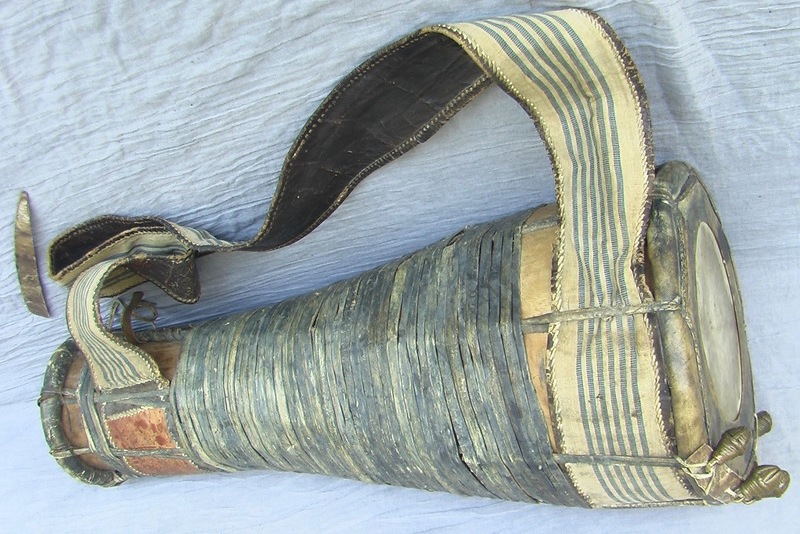
My focus this semester is on African trickster stories, so the Africa reading units are great sources for me: there's trickster Anansi the spider in the West Africa unit, plus more Anansi in the Jamaica unit, plus Brer Rabbit, and... the trickster tortoise of Nigeria who I will be writing about in this post. Here is my version of "The King's Magic Drum" in Elphinstone Dayrell's book, Folk Stories From Southern Nigeria. The story is quite long (around 2500 words), and I have condensed it down to four 100-word stories.


Tortoise and the King's Drum

The King's magic drum produced unlimited food and drink. The King alone knew the drum's secret: if the drum's owner stepped over a stick, warriors would come out of the drum and attack him.
Tortoise, who was poor and lazy, wanted that drum. He climbed a palm-tree and waited. When the King walked by, Tortoise dropped a palm-nut.
The King picked it up.
"You stole my food!" Tortoise shouted. "I'm poor; you must pay!"
"Take whatever you want," said the King kindly.
"Give me the drum!" said Tortoise.
Smiling, the King agreed, but he didn't tell Tortoise the drum's secret.

Tortoise is Rich

Tortoise rejoiced. "With this drum, I will have food and drink without working!"
Tortoise ate, and he was happy.
Tortoise fed his family, and they were happy.
Tortoise feasted the whole village, boasting about his wealth. Now everyone admired Tortoise.
One day Tortoise got drunk on palm-wine and started to dance. As he danced, he stepped over a stick. 
He wanted more wine, but when he beat the drum, the warriors emerged, armed with whips and clubs, and they attacked Tortoise.
Tortoise was angry. "I should not be the only one to suffer!" he thought, and he made a plan.


Tortoise's Revenge

"When I was poor, everyone mocked me," Tortoise thought. "Now they only pretend to like me, but I'll teach them a lesson."
Tortoise announced another feast. He invited all the men and animals, but he sent his own wife and children away.
Then, when everyone arrived, Tortoise beat the drum. The warriors appeared and attacked all the guests. Tortoise kept drumming, and the warriors kept attacking.
Tortoise didn't stop until all the guests were lying on the ground, groaning in agony.
Then Tortoise went to the King. "This drum is no good!" he said. "You must give me something else."


Tortoise and the Breadfruit-Tree

The King showed Tortoise a magic breadfruit-tree. "Every morning, the tree produces breadfruit. Harvest only once each day, not twice."
Tortoise gathered breadfruit each morning, and his family ate happily.
Tortoise's son asked where the food came from, but Tortoise wouldn't say. So the son poked a hole in Tortoise's sack and filled it with ashes. After Tortoise returned with breadfruit, the greedy son followed the trail of ashes. But when he reached for a breadfruit, a thorn-bush sprang up and swallowed the tree.
When Tortoise came the next morning, there was no tree. 
Just a thorn-bush.
No more magic.


Author's notes.

Here is a link to the story: The King's Magic Drum

The motif of a magical object that can bestow food or punishment regularly shows up trickster stories, including African American trickster stories, like this Anansi tale: Anansi and the Avocado Tree

The story starts by explaining how the king uses this magic drum to keep the peace: whenever his enemies showed up, the king would use the drum to summon a huge feast, and instead of fighting, he would feed his enemy, and they would leave happy. The king is a very sympathetic character in this story (not always the case with kings in folktales!).

In the original story, it was the princess who picked the palm-nut up and then Tortoise petitioned the king, but to keep the story short, I went straight to the king. 

Also, in the original story, the tree drops cooked foo-foo; you can read about foo-foo (fufu) at Wikipedia. I made it a breadfruit tree, since foo-foo is not a familiar term in American English. Breadfruit is not familiar, but at least you can tell right away that it is some kind of foodstuff; more about African breadfruit.

The thorn-bush at the end is called "prickly tie-tie palm" and that is where tortoises supposedly live today.

Image information

Breadfruit: Treculia africana.
Breadfruit: also called ukwa.


Saturday, February 6, 2021

Week 5 Story: More Aesop's Tricksters

I did Aesop for Week 3, and I decided to do more Aesop this week, focusing on tricksters again! This time there are five stories: the trickster succeeds in the first two, but you will see that the trickster gets thwarted in the remaining three fables.

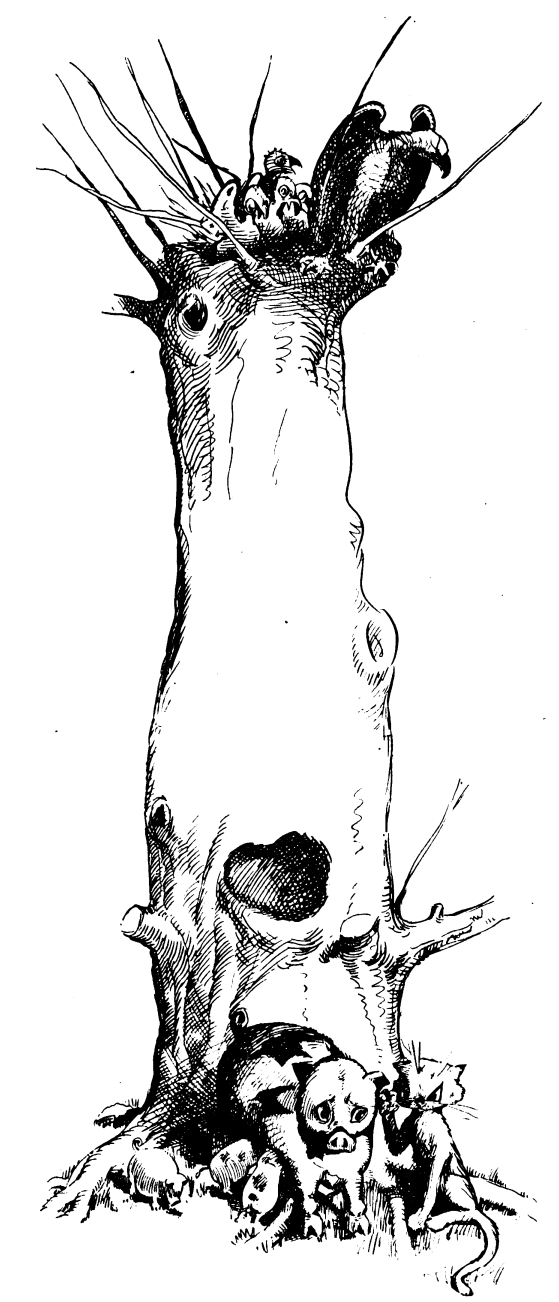
The Cat and her Neighbors 

An eagle, cat, and sow lived together in a tree: eagle on top, sow at the bottom, and cat in-between.
The cat said to the eagle, "Beware: the sow is digging up the tree's roots in order to topple it and eat your chicks."
To the sow she said, "The eagle craves your little piglets."
The eagle dared not leave her chicks unguarded, nor did the worried sow venture forth to find food, so they both finally starved to death.
The cat and her kittens then had the whole tree to themselves, and they fed on the chicks and piglets.


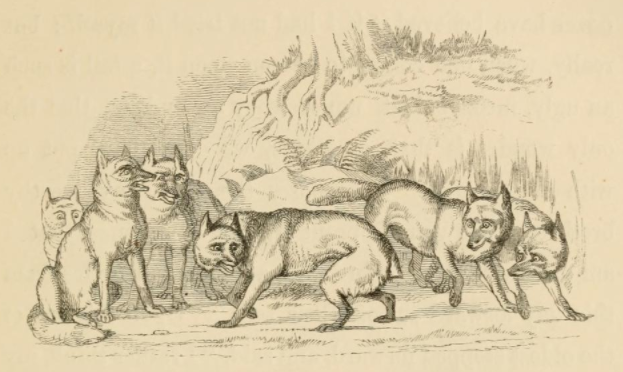
The Fox with a Short Tail

A fox had gotten trapped in a snare, and lost his tail as a result.
He then ran into some other foxes. "My brothers, where are you going?" he asked.
"We're on our way to the lion's palace," they replied.
"The lion's palace? I was just there, which is where I learned about the latest fashion: short tails!"
When they heard this, the other foxes immediately cut off their tails too.
Then the fox burst out laughing, glad to have these partners in his misery. "They may not have shared my danger," he said, "but now they share my shame."


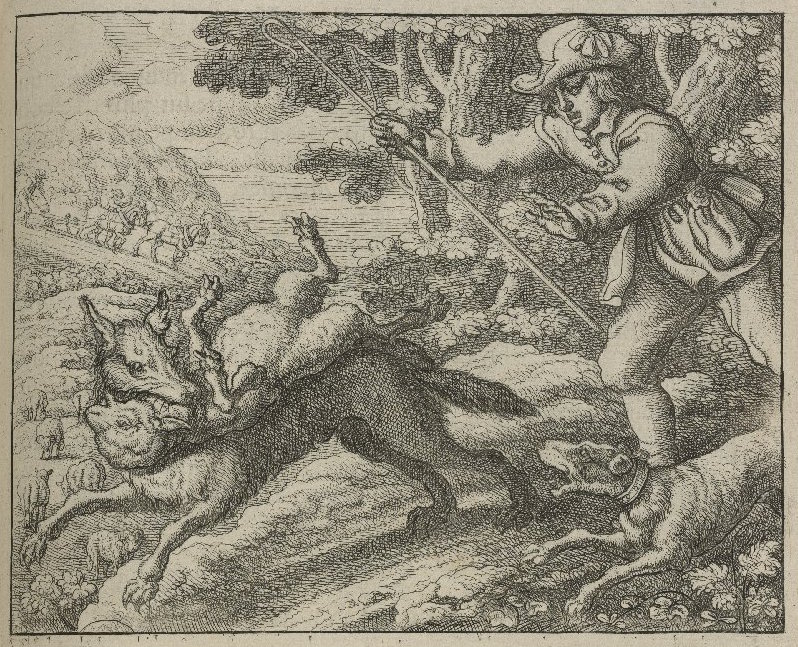
The Boy Who Cried Wolf

The shepherd's boy grew bored tending the sheep and decided to play a trick.
"Help!" he shouted. "There's a wolf!"
The villagers came running, and he just laughed. "There's no wolf," he said.
A few weeks later, he did it again, laughing when the villagers came running.
Then, not long afterwards, the wolf really did attack the flock!
"Help!" he shouted. "There's a wolf!"
But no one came running.
He shouted even louder. He screamed. He shrieked.
No one came. "He won't fool us a third time," the villagers said.
So the wolf ravaged the flock, killing all the sheep.


The Sly Sheep and the Wolf

The wolf was hungry, but dogs guarded the flock, so he disguised himself as a sheep.
He then approached a sheep and said sweetly, "Come with me, dear. I'll show you some lovely grass."
"You're just a weak sheep like me," the sheep replied. "If you were a big, strong wolf who could protect me from enemies, then I'd go with you."
"Ah, that's just what I am!" said the wolf, casting off his disguise.
"You look very strong," laughed the sheep, "but just in case, I'll call the sheepdogs to come with us."
The wolf turned tail and ran!


The Crow and the Fox, Partners

A crow and a fox were partners. When they got hungry, the fox would put on a monk's habit, kneel, hold a missal in his front paws, lift his eyes heavenward, and pray reverently.
Then the crow would call the chickens to confess their sins. "It's a miracle!" the crow would shout. "A most holy fox will hear your confessions and intercede with God on your behalf."
The hens wanted to follow the crow, but this time a rooster stopped them. "Silly hens!" he said, suspecting foul play. "You cannot trust a crow, and a fox even less so."

0113 De vulpe et corvo


Author's Notes and Image Information

The Cat and her Neighbors. This is an example of a trickster who succeeds: the eagle and the pig both believe the lies that the cat tells them. This is Perry 488. The illustration is by Eksergian.  

The Fox with a Short Tail. This is an unusual example where a fox is tricking his fellow foxes instead of some other species. As in the previous story, this trick depends upon a lie and the fools who believe it. This is Perry 17, and the illustration is by Tenniel. (Yes, the same Tenniel who famously illustrated Alice in Wonderland!)

The Boy Who Cried Wolf. This is probably one of the most famous Aesop's fables, and it shows a trickster's downfall: the trick succeeds the first time, second time, but not a third time. Although, in terms of saving the sheep, it probably would have been better if the villagers had believed the boy, despite his past behavior! This is Perry 210. The illustration is by Barlow

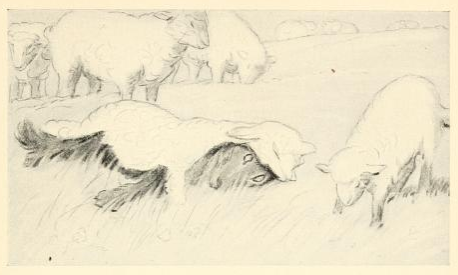
The Sly Sheep and the Wolf. This is the proverbial wolf in sheep's clothing... but the sheep is not so easily fooled! This is a nice example of the trickster tricked, where the wolf, confident that he is tricking the sheep, is instead the one being tricked. This is not in Perry; it comes from the wonderful French fabulist Desbillons. The illustration is by Herford. 

The Crow and the Fox, Partners. I like fables about pretend-piety like this one! Sometimes fake piety succeeds; sometimes not, as in this fable: the hens are ready to believe, but not the rooster (although in other fables the rooster is not so wise, and in other fables the hens are perfectly able to take care of themselves). This fable is not in Perry; it's from a medieval story collection called the Speculum Sapientiae (The Mirror of Wisdom), and that's also the source for the illustration.


Sunday, January 24, 2021

Week 3 Story: Aesop's Tricksters

I've decided to focus my work this semester on tricksters, so I wrote a some tiny trickster stories for Week 2, and now I'm going to settle into writing trickster stories every week. I'm curious to see what I learn by looking specifically for tricksters every week.

The obvious place to start this week is with Aesop, so I chose the Aesop with Milo Winter's illustrations. Here are some tricksters I found there, retold in 100-word style.

The Kid and the Wolf

A young goat sprouted horns. Feeling brave and bold, he wandered away from the flock, looking for fresh grass to eat.
A hungry wolf saw the kid wandering alone, far from the flock.
"You'll make a nice little feast!" he growled as he grabbed the kid.
"I'm glad to oblige, Mister Wolf," said the quick-thinking kid. "Let's sing and dance to celebrate your feast!"
The kid started singing and whistling and clicking his heels. Enchanted by the music, the wolf also started to dance, letting go of the kid, who laughed and ran back to the safety of his flock.


Rooster, Dog, and Fox

Rooster and Dog decided to travel the world together. At night, Rooster flew up in a tree, while Dog slept down below. Each dawn, Rooster crowed, just like back on the farm.
Fox heard Rooster crowing. "I've found my breakfast!" he thought, running towards the sound.
"Hello, Rooster!" Fox shouted. "I see you're a stranger here. Let's get acquainted! I'll be your new friend."
"Gladly!" said Rooster. "Go tell the doorkeeper below to let you in."
Fox eagerly ran to the tree, where Dog was waiting. He tore Fox to pieces, and then shouted to Rooster,  "Thanks for the breakfast!" 


The Eagle and the Crow

An eagle swooped down from a lofty cliff and snatched a sheep from the flock.
When the crow saw this, he wanted to do the same thing. "I'm strong! I've got wings! And a sheep would be something very nice to eat!"
So, squawking loudly, the crow swooped down and landed on a sheep, but instead of carrying the sheep away, all he did was get his feet tangled in the wool. He couldn't even fly away!
The shepherd saw the crow and laughed. "You thought you were an eagle," he said, "but now you know: you're only a crow."


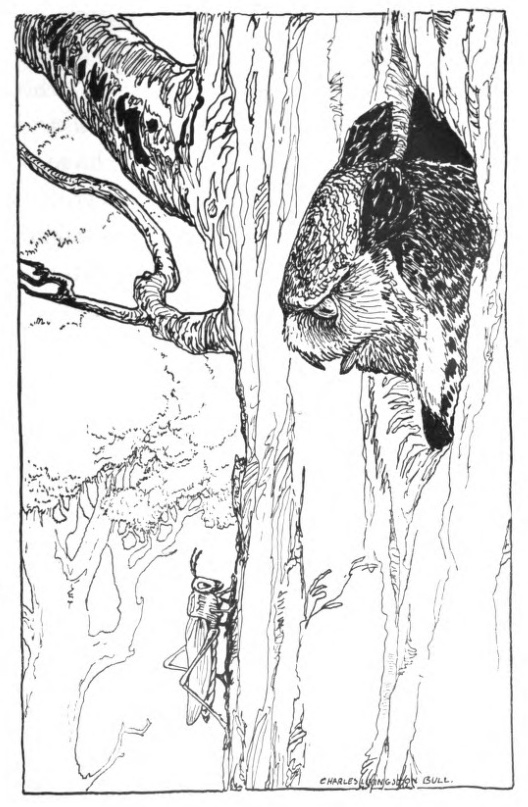
The Owl and the Grasshopper

The owl likes to sleep during the day, which is when the grasshopper likes to sing.
"Please be quiet," the owl asked politely. "I'm trying to sleep."
But the grasshopper just laughed and sang even more loudly.
Then the owl said, "Since I cannot sleep, let's enjoy a drink together! I have a bottle of wine that my mistress Athena gave me. As your divine music is worthy of Apollo, I'll share it with you."
Flattered, the grasshopper entered the owl's house.
And as soon as he did so, the owl ate him up, and then went promptly to sleep.


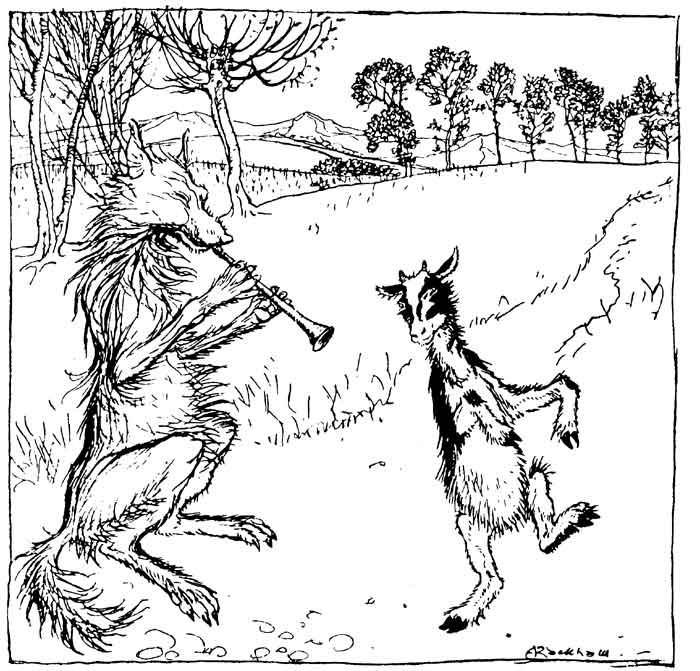
1. The Kid and the Wolf. This is Perry 97. The illustration is by Rackham; it shows the wolf playing a flute, but I couldn't figure out how to get the flute into this tiny version of the story. This trickster uses his wits to escape from an enemy who is far stronger than he is, but not very smart.

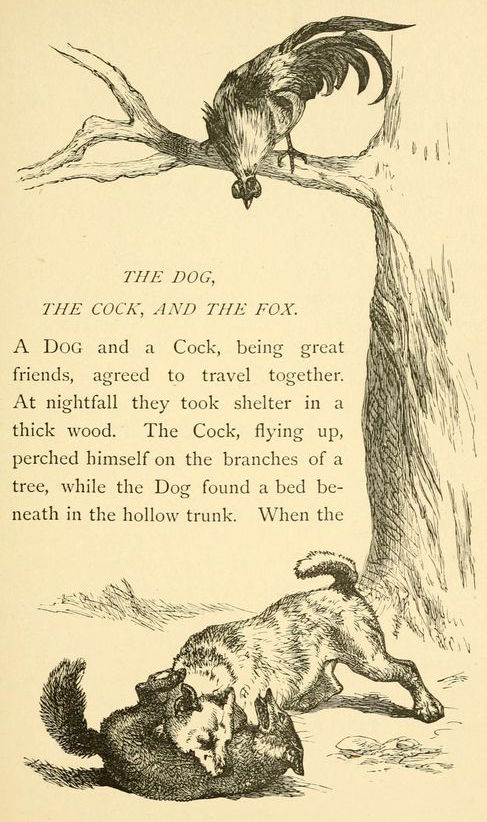
2. Rooster, Dog, and Fox. This is Perry 252. The illustration is by Weir. This story has the nice twist of the trickster-tricked: the fox is trying to trick the rooster, but in his greedy hunger, the rooster is able to trick the fox in the end.

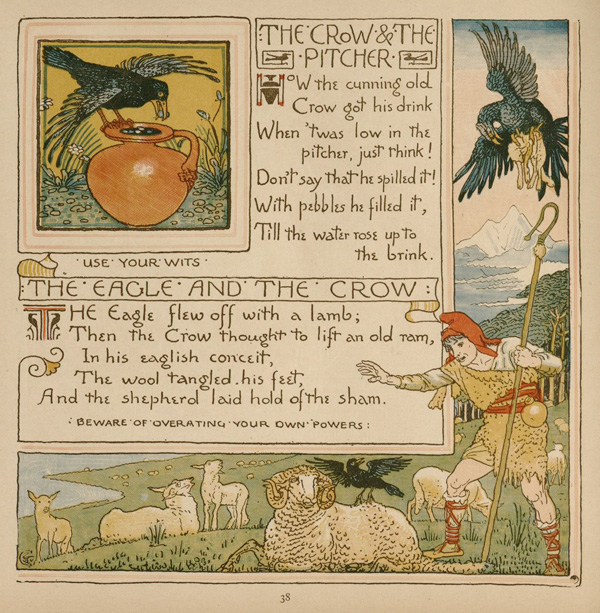
3. The Eagle and the Crow. This is Perry 2. The illustration is by Crane. This is an example of "foolish imitation" which is not exactly a trickster story, but it is a common element in trickster stories: either the trickster gets in trouble for trying to imitate something beyond his powers (as here), or else a foolish character imitates the trickster and the trick fails. In the original story, the shepherd clipped the crow's wings and took it home as a pet for his children.

4. The Owl and the Grasshopper. This is Perry 507. The illustration is by Bull. The story is found in the Roman poet Phaedrus, and you can see how he uses a bit of mythology woven into the story, mentioning both Athena (the owl was Athena's special bird) and also Apollo. The owl knows how to use both flattery and greed to trick the grasshopper.


Friday, January 15, 2021

Week 2 Story - Tiny Tricksters: Jackal, Monkey, Agouti

I had done a Tiny Tricksters version of the trickster stories in the anthology for the Indian Epics class (stories here), so I thought I would do the same here for Myth-Folklore. The Trickster section of the Anthology had one long story from India; it was not easy to turn it into a 100-word story, but I did it!


The Tiger, The Brahman, and the Jackal

"Help!" yelled Tiger, trapped in a pit.
A passing Brahmin heard him. "I'm scared to help you," he said.
"Don't be scared!" Tiger begged.
The Brahmin helped Tiger out... then Tiger grabbed him.
"Help!" yelled the Brahmin.
Jackal arrived. "What's wrong?" he asked.
"I'm HUNGRY!" roared Tiger.
"But I rescued him from the pit!" protested the Brahmin.
"What pit? Where?" Jackal asked.
"That pit! There!" snarled Tiger.
"You could never fit in there," Jackal replied.
"But I did!!" yelled Tiger.
He jumped into the pit, and then realized his mistake.
"This time," said Jackal to the Brahmin, "leave him there."

Of course, I had to leave out a lot of the story, which has different judges before the jackal arrives, etc. But still, I like how it turned out. The idea of the trickster getting someone to do something to prove a point is one of my favorite trickster tricks, and it works really nicely in this story. In the original, the jackal pretends to be very confused... which takes a lot of words. This strategy took fewer words. :-)

This story is actually famous all over the world, so for my microfiction experiment here, I'll include two other versions of this story from totally different sources: one from the Renaissance Latin fabulist Abstemius which features a monkey as the judge instead of a jackal, and also one from Jamaica, which features the trickster Anansi being tricked (Anansi often gets makes makes foolish mistakes when he gets greedy), with Agouti as judge.


The Man who Rescued a Snake

A snake was stuck under a rock.
"Help me!" he shouted at a man who walked by. "Free me, and I'll give you a treasure!"
"I'll help you," said the man, and he freed the snake, but instead of giving him a treasure, the snake threatened to kill him.
As they were arguing, a monkey came by.
"Be our judge, monkey!" they said.
"You'll have to show me exactly what happened," said the monkey.
So the snake got back under the rock, and then the monkey said, "I advise you to leave that ungrateful beast under the rock this time!"


Anansi, Snake, and the Rock

Snake was trapped under a big rock.
"Save me!" Snake shouted when Anansi walked by.
"No!" said Anansi. "You'll eat me."
"I won't eat you, I promise!" shouted Snake. "I'll give you a reward!"
Anansi rolled away the rock.
"Now I'm going to eat you!" said Snake.
"That's not fair!" said Anansi.
Agouti walked by. "Be our judge, Agouti!" they said.
"Well," said Agouti, "you better show me what happened."
"I was under this rock," said Snake, and then Anansi rolled the rock back on Snake.
"Leave him!" said Agouti. "He'll have to find some other fool who trusts him."


Here's what agoutis look like:


Bibliography.
India. Tiger, Brahmin, and Jackal in Indian Fairy Tales by Joseph Jacobs.
Abstemius. Simius Iudex, Serpens, et Vir (in Latin).
Jamaica. "Nansi and Snake," in The Magic Pot: Nansi Stories from the Caribbean by Odeen Ishmael.

Image source. Agouti - Wikimedia.

Week 2 Story: Tiny Tricksters

 I like tricksters! And there were some good trickster stories in here, so instead of one big trickster story, I did several tiny tricksters. Each of these stories is just 100 words long. There are notes at the bottom.


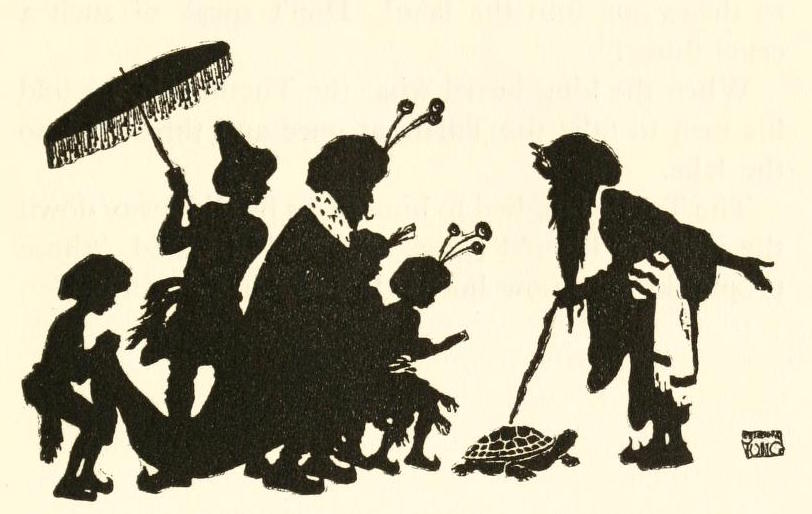
The princes shouted, "Father, we saw a lake monster!
The king's guards went and caught the monster. It was only a turtle, but the princes had never seen a turtle; it frightened them.
"How shall we kill it?" the king asked them.
"Crush it!" said the first.
"Burn it!" said the second.
The third prince feared the water, so he said, "Drown it!"
At this the turtle shrieked, "Please don't drown me, good people!"
"Let the turtle be drowned," commanded the king.
They threw the turtle into the lake.
Laughing, the turtle dove down into the water. "Home at last!"


2. The Crane and the Fish

The lake was drying up.
“Don’t worry, dear fish-friends!” said a crane. “I'll carry you to my home, a big lake nearby.”
The fish agreed, and the crane carried them off one by one. But the crane didn't relocate the fish; he devoured them.
Finally only a crab remained.
“Come on!” said the crane.
But as they were landing, the crab looked down and saw the fish bones, so he grabbed the crane's neck with his pincers.
“Let go!” the crane said, but the crab squeezed.
SNAP!
He then lived happily ever after in the big lake.


3. The Monkey's Heart

Craving Monkey's heart for supper, Crocodile swam to the riverbank where Monkey lived. "Let's go to Banana Island, Monkey!"
"But you know I can't swim."
"Don't worry! I'll carry you."
Greedy for bananas, Monkey jumped on.
Crocodile plunged deep under the water.
"What are you doing?" Monkey shrieked.
"I'm going to eat your heart for supper."
"But I left my heart in the tree!"
Monkey pointed to the fig tree on the riverbank.
"Well, go get it!" shouted Crocodile.
Crocodile swam back to shore, and Monkey leaped into the tree.
"You can fool me once," he cackled. "But not twice!"


4. Crocodile in the River

Crocodile noticed Monkey using a rock to cross the river; Monkey would jump from riverbank to rock, and from rock to riverbank.
"I'll make my back look like a rock," thought Crocodile. "He'll jump on me, and I'll catch him!"
Monkey saw a suspicious new rock in the river. Before he jumped, Monkey said, "Hello, Rock!'
Crocodile said nothing.
Monkey shouted, "Hey, Rock! Why don't you answer me like you usually do?"
Crocodile realized he had to answer. "Hello, Monkey…" he said cautiously.
"Hello to you, Crocodile," Monkey cackled, "and goodbye! I won't be jumping on you today… or ever!"


Bibliography and Notes:
1. Two Turtle Jatakas. From Jataka Tales by Ellen C. Babbitt. This resembles the very famous briar-patch story about Brer Rabbit of course: whatever you do, don't throw me in that briar-patch!
2. The Cunning Crane and the Crab. From The Giant Crab, and Other Tales from Old India by W. H. D. Rouse. This story is structured so we see that the fish fall for the crane's trick, but the crab does not.
3. The Crocodile and the Monkey's Heart. From Eastern Stories and Legends by Marie L. Shedlock. I had to leave out the crocodile's wife who was the one who wanted to eat the monkey's heart.
4. The Crocodile in the River. From The Jataka: Volume 1 translated by Robert Chalmers. I only did the first half of this story. This is a trickster motif you can find all over; here's a Brer Rabbit version: Heyo, House!