Showing posts with label Spring2019. Show all posts

Tuesday, August 6, 2019

Tucson, Cracow, Berkeley... My Favorite Places

Since I just could not limit myself to one place, I decided to pick three favorite places. Here they are!


Tucson, Arizona. I lived in Tucson in the 1970s when I was a little kid, and of the many places we lived, Tucson was my favorite. It is so beautiful! We lived in a house in the foothills of the Catalina mountains which you can see here. Aren't the saguaros beautiful?

(Sabino Canyon in the Catalinas:
Wikimedia Commons)

The saguaro blossom is the state flower of Arizona!


Kraków (Cracow), Poland. I did a "study abroad" in the summer of 1985 — and what an adventure! I was a Polish major in college, so getting to live in Poland that summer was a dream come true. After I graduated from college I moved to Poland and lived there for a while, near Płock (which is not far from Warsaw). Here's a picture of the "Sukiennice" ("The Cloth Hall") on the main town square in Kraków:

(Stary Rynek: Wikimedia Commons)

And here's a picture of Płock also; it is located on the Wisła (Vistula) river:

(Płock: Nocowanie)


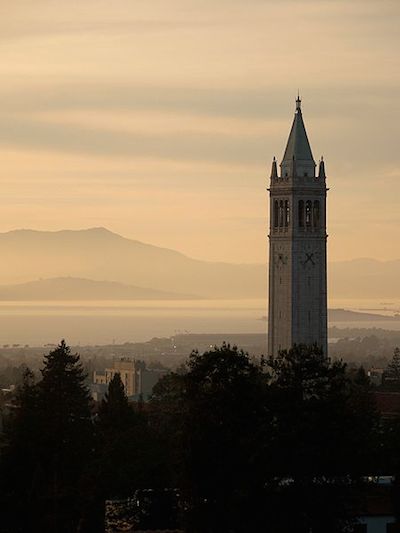
Berkeley, California. I lived in the Bay Area for over 10 years, and I guess it is the place I love the most. For sure it is the place I know best. I moved to San Francisco after graduating from high school because it seemed like the most exciting place to be ... and it was! Then, after working as a secretary for a year, I decided to go to college, so I went to Berkeley. After graduating from Berkeley in 1986, I lived in other places, but for grad school I went back to Berkeley again; that was in the 1990s. It's a great place and is definitely a big part of who I am! Here is a beautiful picture that shows the Campanile (bell tower) on the Berkeley campus, with San Francisco Bay in the background.

(Campanile seen from the Stadium,

Here is the campus building where I took most of my classes: Dwinelle Hall, home to the departments of Classics, Slavic Languages, and South Asian Studies:


And here is the best building of all (for me, bookaholic that I am): Doe Library.


Sunday, April 14, 2019

Famous Last Words Week 12: My best story twist!

I added the third story to my Storybook this weekend (Maiyarap) AND I wrote the final Hanuman story which I will also be adding to the Storybook: Hanuman and Pirakuan. This was so exciting: I had an idea last weekend for a twist in the story (bringing Hanuman's mother from the first story here into the final story) ... and it worked! It was one of those things where the idea seemed really good, but of course you never know until you actually write the story. And it worked great! I am so happy about how it turned out, and who knows, maybe someday I will write a Hanuman novel, using material from the Indian traditions and South Asian epics and everywhere. But hey, if I never get around to that (and, eegad, I've got so many things I want to write that I will only get a small fraction of them done...), then at least I will written my Storybook about Hanuman this semester.


It was really nice to have this creative adventure going on because I have been so depressed and angry with what I have been learning about data-mining and machine-learning in education, and about Canvas in particular. I started reading a book by Shoshana Zuboff, The Age of Surveillance Capitalism: The Fight for a Human Future at the New Frontier of Power, and not only is it beautifully written, it is also incredibly frightening. The transformation she describes towards data and predictive analytics as commodities is exactly what I see happening at Instructure. Is there anything we can do to stop it? I guess not, especially since so many people in the world of education are embracing analytics and automation. Argh! I wrote a data-mongering round-up post this week for the first time, and I will try to do that every week as I am reading and learning about all this (scary) stuff.


Story: Hanuman and Pirakuan

This story is a continuation of Maiyarap: in that story, Ravana's ally Maiyarap kidnapped Rama, and Hanuman has now come to rescue him. Hanuman's son, Macchanu, told him to seek help from Maiyarap's sister-in-law, Pirakuan:


Hanuman raced towards the banyan tree, looking for Pirakuan. He concealed himself high in the branches as he saw her approaching. Macchanu said he could trust her, but she was Maiyarap's sister-in-law after all. "That must be her," Hanuman thought to himself, seeing her green eyes brimming over with tears.

"It is karma," she muttered, filling her water-bucket. "I condemned my mother's sons in the river's water, and now I draw water in which Maiyarap will boil my own son, together with that god-like stranger."

At these words, Hanuman jumped down, landing beside the well and bowing his head. "Macchanu sent me, Lady Pirakuan. I am here to rescue the stranger, and I will rescue your son also. Will you help me?" When she did not reply, he lifted his eyes to look directly at her. "My lady, will you help me?"

Pirakuan stared back at him, her mouth open in speechless surprise.

"My lady," Hanuman repeated for the third time, "will you help me?"


"Of course I will help you," she said, shaking her head in wonder. "Forgive my confusion; I will explain later. But now, we must hurry: Maiyarap is holding my son and your friend in a cage inside the palace garden. He put them into a deep sleep while I bring buckets of water to fill the pot. The fire is blazing hot, and the pot is almost full; you have arrived just in time."

"Excellent!" Hanuman exclaimed. "I shall kill him myself, and we can all make our escape together!"

"It is not so easy as that," said Pirakuan. "Maiyarap has concealed his life-force far from here. Before he died, my husband, Maiyarap's brother, told me about it; he feared that someday Maiyarap might try to kill our son. See that hill in the far distance? On top of that hill, there is a tree, and in that tree, there is a birdcage, and in that birdcage there is a parrot who has swallowed Maiyarap's life-force to keep it safe. As long as that parrot is alive, Maiyarap is invincible. We'll never be able to get the parrot in time."


Hanuman laughed. "Have no fear, my lady!" Then he grew to an enormous size, stretching miles high into the sky. The gigantic monkey reached his arm towards the hill, and just as quickly as he had grown in size, he shrank back down to earth, but now he held the birdcage in his hand. As Pirakuan stared in amazement, he opened the birdcage and grabbed the parrot.

"You take this," he said, "and now, let's find Maiyarap." He then turned into a frog and leaped with a splash into the water-bucket.

Pirakuan stuffed the parrot inside her inner shirt, grabbed the bucket, and hurried as fast as she could to where Maiyarap awaited her in the garden; the guards noticed nothing out of the ordinary as they let her through the palace gate.


"Wretched woman!" shouted Maiyarap. "What took you so long? It's time to boil that worthless son of yours along with this puny human. At last, we can begin!"

"Brother-in-law, I…"

But before she could speak another word, Hanuman leaped out of the water-bucket, once again in his monkey form.

"A monkey!" Maiyarap exclaimed. "Ravana told me the human had an army of monkeys, but I thought he was joking."

"Laugh all you like, Maiyarap," Hanuman replied. "But I am here to kill you. Or, more precisely: to kill your parrot!" He then turned to Pirakuan and commanded, "Show him the parrot."

Without taking her gaze from Maiyarap, Pirakuan reached into her garment and pulled out the parrot, clutching it tightly as she waved it slowly back and forth.

Maiyarap stared in horror. "Damn you, you traitorous whore!" he shouted. "Damn you and my lovestruck brother, damn…"

Interrupting him Hanuman shouted, "Throw it into the fire!"


Pirakuan hurled the parrot into the flames, and as the bird burned, Maiyarap's skin crackled and blackened, flames flickering forth from his mouth as he tried to speak.

And then, Maiyarap was dead.

"Hurry!" Pirakuan shouted. "We have to get my son and your friend out of the cage and wake them somehow. Can you do that, good monkey?"

"Why of course!" said Hanuman happily. He pulled the iron cage open and grabbed Rama and Wayawik, both fast asleep. "I will carry these two while you ride on my back."

So Pirakuan jumped on Hanuman's back and he flew up out of the garden, back to the pond at the entrance to the underworld. Macchanu ran to assist Pirakuan as she climbed down, while Hanuman laid the sleeping Rama and Wayawik on the ground, softly chanting a mantra to awaken them.


"Hanuman!" said Rama sleepily. "Is it already morning?"

Hanuman laughed. "It is, my lord! And with the help of this good lady, I have killed Maiyarap, and this is his nephew, her son, beside you. And this —" Hanuman grabbed Macchanu and pushed him towards Rama. "This is my son, Macchanu."

"And I, Lord Hanuman, am your mother, Swaha," said Pirakuan softly.

Hanuman whirled around to face her, dumbfounded.

"I told you I would explain later," she said smiling at him, "and this is my story. After leaving you with Shiva on Mount Kailash, I descended into the world again, choosing a new name for my new life. I fell in love with Aiyarap, Maiyarap's brother. When he died, I found myself with my young son trapped here in Maiyarap's world. I never dreamed you would be the one to save us."

Amazed, Hanuman embraced her. No longer alone, he now had a son, and a mother, and a new-found brother too.

Rama appointed Macchanu and Waiyawik as co-kings of Maiyarap's kingdom, and then he returned with Hanuman to the camp. They had a war to fight against Ravana after all.

"I will come back, Mother," said Hanuman to his mother in parting.

"I know you will, my son," she said. "I know."


Author's Note. I have to say right away that the idea that Pirakuran is Hanuman's mother is totally my idea! I had written about Hanuman's birth in an earlier story, and I had wondered all semester long if I could bring back Swaha somehow, and then I had this sudden flash of inspiration, realizing that she could be Pirakuan. The reference to Pirakuan condemning her brothers in the water is a reference to that earlier story. In the traditional version, Pirakuan is Maiyarap's sister, not his sister-in-law, so that was the only little change I had to make. I made up the name Aiyarap based on the Indian tradition that makes Mahiravana the twin brother of Ahiravana.

Another change I made was the parrot: in the original, Maiyarap has concealed his life-force in a bumblebee which Hanuman is able to grab much like I described in my story; I wanted to use a parrot because I thought it would be more fun to have Pirakuan hold it her hand to taunt Maiyarap. I was inspired to choose a parrot because of the Indian folktale Punchkin, where the parrot is the evil magician's life-force animal. The set-up is more elaborate in that story:
Far, far away, hundreds of thousands of miles from this, there lies a desolate country covered with thick jungle. In the midst of the jungle grows a circle of palm trees, and in the centre of the circle stand six chattees full of water, piled one above another: below the sixth chattee is a small cage which contains a little green parrot; on the life of the parrot depends my life; and if the parrot is killed I must die. It is, however, impossible that the parrot should sustain any injury, both on account of the inaccessibility of the country, and because, by my appointment, many thousand genii surround the palm-trees, and kill all who approach the place.
In the Thai version of the Ramayana, Ravana also has his life-force secretly concealed, and just as Hanuman was able to obtain the life-force to kill Maiyarap, it was also Hanuman who obtained Ravana's life-force, enabling Rama to kill him in the end.

Bibliography: My main source for this story is The Ramakien: A prose translation of the Thai Ramayana by Ray Olsson (published in Bangkok in 1968). Online at Chulalongkorn University Library.

Image Information:
banyan tree
Hanuman and Butsamalee (I could not find one of Hanuman and Pirakuan)
parrot
Maiyarap (this is actually an image of him preparing the magic powder)
Hanuman
Hanuman carries sleeping Rama
Hanuman mural

Although I did not include this part of the story, here is an image showing Pirakuan being weighed on the scales; Hanuman has concealed himself as a lotus thread woven into her garment (I had him sneak in as a frog in the bucket):


Monday, April 8, 2019

Week 11: Famous Last Words

It's Monday morning, so that means grace period, but I decided I wanted to write a famous last words post for Week 11 after all... mostly because I had so much fun working on the Freebookapalooza this past weekend. It's the first time all year that I've had time to really work on that, updating the bibliography pages and randomizers for the Indian, Native American, African, and Pacific books... which is over 500 books total, so that was a really good start. Call it SPRING CLEANING ha ha. I actually didn't even have a randomizer for the Pacific section but now, with over 50 books in the section, it made sense to have a randomizer, so now I do!


Plus in addition to being spring cleaning, it was a great promise of things to come this summer. I wrote up a blog post about that at my Digital Teaching blog actually: Curating a Public Domain of Folklore and Mythology. It's certainly not as dramatic as all the students who will be graduating from OU in May (so soon!)... but I definitely have a sense of a kind of "graduating" as I move away from course design projects (where I focused so much effort over the past almost 20 years, wow) into something new that I hope will point me forwards (maybe not for a full 20 years, but still: for a long time!). There is such a wealth of resources there in the public domain books, but it's all kind of messy and also confusing: what is the best way to use those books really? Those are the kinds of questions I want to focus on... and once summer arrives, I will have some time to do that!

Meanwhile, things are wrapping up / winding down in a really good way overall for this class because I figured out what I am going to do with my final story. I didn't have a really good twist or focus, but now I do: I figured out a HUGE twist I am going to introduce into the story having to do with Pirakuan, the wife of Maiyarap. I almost left her out of my story for this week (Hanuman and Macchanu), but something made me keep her in the story... and now: surprise! I am going to use her character for a totally new plot development that I hope will give the Storybook a really strong sense of closure, while also wrapping back around to the first story.

But anyway, that's on the agenda for next time when I write a story next weekend. This past weekend was the weekend of the Freebookapalooza, and I totally had fun with it. Yay for free books online, and yay for spring cleaning!

I'll close with this inspiring graphic that came in my Buddha Doodle email today:


Saturday, March 30, 2019

Week 11 Story: Hanuman and Macchanu

Maiyarap Goes to War

The war against Rama was going badly for Ravana, so he sent word to his cousin Maiyarap, King of the Underworld. "Kidnap Rama," said the message, "so that I can defeat his monkey army in battle."


Maiyarap was eager to join in the war, but his sister Pirakuan rushed into the throne room, begging him to reconsider. "Do not go, my brother! This Rama is the god Narayan in human form, and you should not fight him."

Maiyarap was enraged. "You'll learn what it means to defy me!" Then he shouted to his guards, "Have that no-good nephew of mine Waijawik arrested."

Pirakuan burst into tears. "No, my brother, not Waijawik! Arrest me instead! My son has nothing to do with this."

Yes, thought Maiyarap, he had been right: the best way to punish his sister was to punish her son. He would kill Waijawik together with Rama, two birds with one stone. "Now get out, all of you!" he commanded. "I have work to do."

For the rest of that day and all through the night, Maiyarap engaged in magic rituals to prepare a sleeping powder he could use to subdue Rama's allies.

Rama and his Allies

Seeing this, the gods sent Rama a prophetic dream, warning him of Maiyarap's plot.

The next morning, Rama told the dream to the wise Vibhishana, who realized its meaning. "A dangerous enemy will attack tonight, and we must all keep watch. No one is to sleep, nor even to close their eyes, until tomorrow dawns."

Hanuman then enlarged himself to an enormous size, wrapping his tail around the army camp like a giant wall, while Rama and Lakshmana hid inside his mouth. Night fell, but no one slept; they all kept watch as Vibhishana had ordered.


Yet there was nothing they could do to overcome Maiyarap's magical powder: the demon flew back and forth over the camp that night, casting the powder upon them. Soon they were all asleep, even Hanuman, whose mouth gaped open as he snored loudly. Maiyarap crept inside, grabbed Rama, and fled back to his underworld kingdom. There he locked Rama in a cage, together with his nephew Waijawik, vowing to kill them both the next day.

Hanuman to the Rescue

Rama's allies despaired when they awoke the next morning and saw that Rama was gone. Vibhishana warned Lakshmana that this might signal a new assault by Ravana, so Lakshmana sent Hanuman alone to rescue Rama, while he stayed behind to lead their forces for battle. Vibhishana then told Hanuman to look for the nine-petaled lotus that Rama had seen in his dream. "That lotus will lead you to Maiyarap," he promised. And with that, Hanuman flew off on his quest.


He soared through the sky until he saw it: a nine-petaled lotus floating in a pond. He descended, grabbed hold of the lotus, and pulled. Yet there was nothing to pull against; the lotus had no stem. "What mystery is this?" Hanuman wondered as he plunged into the pond. He found the stem half-buried in the mud, and then he shrank himself smaller and smaller until he could slither down inside.

Maiyarap's Kingdom

This was indeed the way into Maiyarap's underworld kingdom, and Hanuman was soon crawling not down, but up, emerging from the stem into the waters of another pond, a pond in the underworld. He leaped to the shore and found himself facing an armed warrior.

A monkey warrior.

A  monkey … with the tail of a fish.


As Hanuman stared in amazement, the strange warrior shouted, "Halt! The guardian of Maiyarap's pond commands you to yield." And with those words, he brandished a club tipped with a lotus flower.

"Surely you jest, little monkey," shouted Hanuman as he summoned his backbone trident. "I yield to no one!"

The Two Monkey-Warriors

And then they fought. The warrior matched Hanuman move for move on the land, and then they tumbled into the water, grappling with one another in the depths of the pond.


Hanuman leaped out of the water and shouted to his opponent, "Tell me who you are, warrior! And why is a valiant monkey like yourself in the service of a demon like Maiyarap?"

The monkey with the fish's tail rose up in the pond and replied, "I am Macchanu, son of Suvannamaccha, queen of the mermaids. My father is Hanuman, and Maiyarap is my foster-father. Who are you?"

Hanuman's heart filled with pride. "But I am Hanuman," he shouted. "And you are my son!"

Macchanu snorted. "That cannot be! My mother told me that Hanuman was a cosmic creature, a monkey-god able to breathe forth moons and stars."

And then Hanuman opened his mouth in a wide smile, breathing forth moons and stars which rose up into the strange sky of the underworld, adding their brightness to its subterranean twilight.

Father and Son

Macchanu stared, dumbfounded, and then looked back at Hanuman, bowing his head. "Father, I am yours to command."

"Just tell me where I can find Maiyarap's prisoner, Lord Rama," said Hanuman.

"Look for the well beside the banyan tree," Macchanu replied, "and wait for a woman to come draw water there; her eyes are green. That is Pirakuan, Maiyarap's sister, and she will help you get inside the stronghold. It is in fact Pirakuran whom I serve; she is a noble lady with a harsh husband. Tell her that I have sent you."

"Thank you, my son," replied Hanuman. "There is more to say, but now is not the time. I will be back, I promise."

"I will await you, my father," answered Macchanu. "But now go! You will find the well that way," and he pointed. Hanuman nodded in thanks and raced away, headed towards the banyan tree in the distance.

"My son," he thought to himself as he ran. "My son…"


[to be continued]


Author's Note. I thought I would be able to finish this story here, but it has turned into a two-parter. In the next part you will learn how Hanuman defeats Maiyarap and rescues Rama. I'm not sure what else I will include next time, but a reunion with Suvannamaccha might be possible! I wrote about her in this story: Hanuman and the Mermaid. As for Hanuman's backbone trident and breathing out stars, you can find out about that there: The Birth of Hanuman.

I did a lot of research into the story of Mahiravana/Maiyarap to get ready to write this, and you can find all those details here: Research for Maiyarap. I made some changes here, especially in shifting the quarrel from Maiyarap's mother to his sister Pirakuan since she is part of the story later. I've used the familiar Sanskrit names from the Ramayana, but the Thai names for the characters of the underworld: Maiyarap, Pirakuan, and his son Waijawik. Pirakuan's green eyes were something I threw in just for fun; I might change that to some other recognition token when I write the second part. Maybe Macchanu needs to give Hanuman a ring, like Rama gave Hanuman a ring as a token for Sita. I also made up the nine-petaled lotus being a sign from the dream, but traveling through the lotus stem was part of the traditional story.

The quarrel in the original has a great moment where Maiyarap smashes his lion-drawn chariot and kills his lions because he is so angry! There are also some wild details in the original about how the gods try to disrupt his magic ceremonies in addition to sending the premonitory dream to Rama, and there is a great way that Maiyarap tricks Rama's monkeys into thinking it is already dawn, but I couldn't find a way to squeeze that in. Maiyarap also has a dream about Waijawik usurping him; I might try to find a way to work that prophecy into it since his hatred of Waijawik has become part of the story too. I'll figure that out when I add the finale next time.

Bibliography. My main source for this story is The Ramakien: A prose translation of the Thai Ramayana by Ray Olsson (published in Bangkok in 1968). Online at Chulalongkorn University Library.


Week 14 Story Lab: Storybook Research for Battle of Maiyarap

It's going to work out perfectly that I have these Week 14 and Week 15 Story Lab options to do the research for the two stories I still want to add to my Storybook project (and I wish I could encourage students to do more mix-and-match like this with the assignments; some are doing that, which is great, and I would like to make everybody feel totally free to mix-and-match). Anyway, for this time I want to do research into the story of Maiyarap and the underworld where Hanuman meets his son with Suvannamaccha, and for the final story I am thinking I want to do the story where Rama tricks Sita into thinking he is dead and sends Hanuman to fly her back to Ayodhya. That's not exactly a story about Hanuman, but I think I could really develop the dialogue between Hanuman and Sita at that moment as a way to look back on all the events of the Ramayana. Anyway, we'll see... for now: MAIYARAP! The main resources I have are Olsson's Ramakien, plus the new book I got by Cadet, the great story and commentary in Lutgendorf's book, and also the ACK comic book! The comic book is actually where I first encountered the story of Mahiravana: Mahiravana: A Magician Outwitted. I've already taken detailed notes on the comic book at that blog. Some details worth remembering: Hanuman tries to protect Rama and Lakshmana by making his tail into a fortress, and he also use the Sudarshana Chakra to protect them from above. Mahiravana tries to enter disguised as Dasharatha, then as Bharata, and he succeeds when disguised as Vibhishana. There is a prophecy that the arrival of men and monkeys will bring Mahiravana's doom. Hanuman enters Durga's temple disguised as a fly. Durga herself tells Hanuman how to defeat Mahiravana. The brothers claim they don't know how to bow, and ask Mahiravana to show them; that's when Hanuman made his move. It's also the origin of the Panchamukha form of Hanuman: to blow out the five lamps that held Mahiravana's life, Hanuman needed to have five mouths to blow with, so he took on four additional faces: Hayagriva, Narasimha, Garuda and Varaha. There are other "pancha" legends about Hanuman here: Panchamukha.

Notice that in the ACK comic book, there is no mention of Hanuman's son, which is the key feature for me. That shows up in both Indian and in the Thai narratives. Here are the notes from Lutgendorf, where this is "Tale 21: The Slaying of Ahiravana" in his collection of 40 tales of Hanuman:

The Slaying of Ahiravana (my summary of Lutegendorf's account)

Ahirvana (Snake-Ravana) was born to Mandodari and Ravana, but he was so repulsive they threw him into the ocean; Simhika raised him. He practices austerities to win great powers, including the boon that his father will some day need his help. After Indrajit dies, Ravana summons his son who promises to kidnap Rama and Lakshmana. Hanuman makes his tail into a fortress and stands guard; visitors arrive -- Dasharatha, Bharata, Kaushalya, Vashishtha -- and Hanuman rejects them, but when Vibhishana arrives, he admits him, and so Ahiravana gets in, puts everyone to sleep, and flies off with the two brothers. Hanuman enters Patala through crack in floor of ocean. He sees various wonders (palace of Vasuki, Kapila's ashram, underwater Ganga), and then he overhears two vultures talking about the feast they will have at Mahakali's sacrifice. Monkey who looks like Hanuman challenges him at the gate; it's Makharadhwaja! He says he is Hanuman's son, to Hanuman's amazement (born of a fish impregnated by drop of Hanuman's sweat during burning of Lanka). Fish was caught, sliced open in Ahiravana's kitchen, and he emerged. He cannot help Hanuman out of loyalty to Ahiravana. They fight, and Hanuman wins. He then flies to palace and, as a fly, hides in a garland. He then presses the goddess's statue into the ground and takes her place. Hanuman opens his mouth for the priests to feed him and devours heaps of food. Hanuman burps and Ahiravana accepts "her" blessing. Now he will sacrifice Rama and Lakshmana! Rama uses riddling words to show he knows where Hanuman is, and then Hanuman emerges and cuts off Ahiravana's head which rolls into the sacrificial fire. Hanuman carries Rama and Lakshmana away; as they leave, Rama appoints Makharadhwaja to be the new ruler of Patala, using Ahirvana's blood from Hanuman's body for the ritual.

Mahiravana and Ahiravana. Lutgendorf also reports a version about Mahiravana and Ahiravana as twins (the Ashwins under a curse of rebirth!). The goddess this time is Kamaksha Devi. The son is Matsyaraja, born from spit that Hanuman coughed up in the Lanka smoke. Matsyaraja defeats Hanuman in the fight, but them admits him to the city. Here Hanuman uses a trick get the priests to feed him through a window ("anyone who looks directly at the goddess will go blind"), and he demands the princes as sacrifice, so priests shove them in too. The three then fight the twin demons, but they keep reviving. Hanuman finds a naga princess who will reveal the secret if Rama will break her bed with his weight; there are seven bees that make the immortality nectar, so Hanuman kills six of them and sends the last one to hollow out the bedstead legs. Rama just has to sit on the bed and it breaks (but he promises her he'll be her husband in a next lifetime). Again he makes Matsyaraja king of Patala.

Mahiravana. In this version, Mahiravana (earth-Ravana) carries the brothers away in a box to sacrifice them to Chandi. Hanuman disguises himself as kingfisher and hears prophecy that monkey will be Mahiravana's doom. As fly, he goes to the goddess, threatens her, and she recognizes him as form of Shiva and cooperates. This version is like the ACK comic book: Rama says he has never bowed and doesn't know how, at which point Hanuman cuts off Mahiravana's head. Mahiravana's queen comes to the temple enraged and throws the goddess's murti into a pond; Hanuman kills her, then Mahiravana emerges from goddess's stomach, and Hanuman defeats him again. They bring this Chandi to Bengal where she is worshiped today.

So, those are the three main versions that Lutgendorf reports, along with some other variants, and he has a TON of notes. The story is at least 1000 years old he says, and is alluded to in the Shiva Purana. There is a Mahiravana Nataka in Sansrkit, a Patala Ramayana in Malayalam, and a Mayiliravana katai in Tamil (peacock-Ravana), plus lots of art, and even an early film from 1918! There are temples today associated with details of the legend. Various goddesses, but all associated with tantric shakta rituals, often with some disgust on the part of the narrators themselves, and Hanuman abusing the goddess, but at the same time we see Hanuman's shakti powers, and sometimes he is allied with the goddess. Ahiravana trying different disguises goes back at least to Krittibasa. Ananda Ramayana has the version with the twins as Ashwin incarnations and the naga princess. This underworld adventure parallels the Sundarakanda in that all the adventures belong to Hanuman, with Rama just in background (he compares it to Arjuna's and Bhima's individual hero quests in the Mahabharata). Lutgendorf has lots of notes on the various naga/serpent themes and motifs. I think this quote sums up why I like this whole Patala adventure so much:
the Ahiravana story has little to say about dharma, family values, kingship, or the importance of keeping one’s word—themes that figure prominently in the classical Rama story. Instead it has everything to do with deception, resourcefulness, and power. [...] Hanuman’s triumph in this story cycle confirms him once again as intermediary par excellence, capable of traversing all realms of being because he is not above displaying some of the qualities of each.
Telling the whole story of the Ramayana from Hanuman's perspective would be so cool, kind of like Nagra's multicultural Ramayana, but with a Hanuman focus and all the extra Hanuman material blended in too. :-)


Ramakien. Lutgendorf does not get into the Ramakien account of this episode in his book (although elsewhere he has a lot of say about Macchanu as one of the manifestations of Hanuman's son). Clearly, the Thai account resonates with the Indian legends, but it also has some distinctive features of its own, so I'll quickly list those here:

Olsson. It starts on p. 181 with Maiyarap Kidnaps Pra Ram, then Hanuman Breaks into the Underworld on p. 185, and then Hanuman Frees Pra Ram and Kills Maiyarap on p. 188 through p. 192.
Maiyarap Kidnaps Pra Ram.  Totsakan summons his cousin Maiyarap, who rules Underworld in Badan. His mother Djantaraprapa urges him not to go. They quarrel violently, and Maiyarap will not listen to her. The kidnapping plan is Totsakan's idea. There is an amazing and weird ritual that Maiyarap performs to get the magic sleeping powder. There is also a prophecy that Waijawik, the son of his sister Pirakuan, will become king of Badan; he has them locked up. Pra Ram had a dream which Pipek interpreted as a warning about Maiyarap's plans: everyone would need to stay awake all night. Hanuman made himself enormous so Ram, Lak, and Pipek went into his mouth, and his tail was a fortress around the camp; Sukreep stood guard. Maiyarap tricked them with the great Komint diamond, hanging it in the sky so it glowed like dawn. The monkeys went to sleep, and then Maiyarap blew his powder on them for an even deeper sleep. Disguised as a monkey, he entered Hanuman's mouth, used the powder again, and kidnapped Ram. He put Ram in a cage, planning to cook him the next day.
Hanuman Breaks into the Underworld. Hanuman goes to the rescue. He descends into the Underworld using a hollow lotus stalk, making himself tiny and squeezing through. He kills a thousand demon guards, slays an elephant, and bursts through the fire wall, Then he squashes the giant mosquitoes as big as chickens. Matchanu the shining monkey with a fish tail guards a lotus pond. They fight; it's a draw. Hanuman is surprised by his strength, and doesn't understand why a monkey lives with demons. "Who are you, and how did you get that fish tail?" The monkey says he is Macchanu, son of Suvannamaccha and Hanuman, while Maiyarap is his foster father. Hanuman realizes the gods kept them from killing each other in their fight. Macchanu says he is lying; "My father can breathe out stars!" So Hanuman breathes out moons and stars. Macchanu does not want to betray his foster father so he answers with a riddle: "Go the way you came." Hanuman realizes that the way in is through the lotus pond and dives in.
Hanuman Frees Pra Ram and Kills Maiyarap. Hanuman meets Pirakuran drawing water and learns that Ram and Waiyawik will be made into soup in the magic kettle. Hanuman offers to kill Maiyarap and help make Waiyawik king. She smuggled him in the form of a lotus fiber in her cloth to get into the palace. But when they weighed her, that fiber still had Hanuman's weight, and the scales broke! The guards told Pirakuan she would die, but Pirakuan, instructed by Hanuman, accused the scales of being old and busted. But, she added, "I would as gladly die now as later!" The guards are impressed and let her pass. Ten million soldiers surrounded Ram sleeping in the cage. Hanuman used magic to burst open the cage and then took the sleeping Ram to Mount Surakan where Angels guarded him. Then he went back to kill Maiyarap. Hanuman came and broke Maiyarap's sword, then his spear, so Maiyarap proposed they make clubs out of palm trees and fight. Hanuman knows it's a trick but thinks it will be fun; Maiyarap's three blows just pound him into the ground. He springs back up: Hanuman smashes his body to bits, but the bits fly together again. Pirakuran reveals that there is a bee in a palm tree on Mount Treekoot that holds his soul. Hanuman enlarged himself, reached out to Treekoot, and grabbed the bee, squeezing it between two fingers and taunting Maiyarap. He then squashed it and cut off Maiyarap's head. He gave kingdom to Waiyawik, with Matchanu as vice-king. He went to fetch Ram, and also carried Maiyarap's head, and flew back to camp. Ram awoke with no memory of what had happened. Then he saw Maiyarap's head and learned what he owed to Hanuman. He decides to offer Hanuman a kingdom and give him a special nine-stoned ring.


In Cadet's book, this story starts on p. 170 and goes on through p. 186; I've listed the sections below, noting only new items I didn't note above.
103. Totsagan's nephews ride to the underworld.
104. Miayarap, Lord of the Underworld, receives Totsagan's nephews.
105. Maiyarap smashes his chariot. When his mother tells him not to go, Maiyarap is enraged and destroys his own chariot and all the lions that pull it. This calms him down, and now goes to Longka. There are some illustrations of his smashing his chariot, which is why I include it here (the scene is also in Olsson).
106. Maiyarap conducts magic rites. He is frustrated by Totsagan's insistence that he use magic instead of open warfare, but agrees. The gods themselves disrupt Maiyarap's magic ceremony. They manifest as two tempting women, as two battling elephants, and then two savage lions, but Maiyarap attacks the lions and throws their hearts into the cauldron to give it added power (is this him thwarting the gods? or is this all part of their plan? I wonder!)
107. Maiyarap enters the sleeping Hanuman's mouth. The magic diamond is spelled Gomin here. Even Hanuman falls into a light sleep when he thinks they have passed the night safely.
108. Maiyarap flies to the underworld with Phra Ram. The water Pirakuan is drawing is the water that will be used to boil Ram and Waiyawik!
109. Hanuman fights with Matchanu. The fire wall is a range of flaming volcano mountains, but Hanuman just stomps them out. At first, Hanuman just wants to kill Matchanu, but he sees how handsome he is, so he relents; "Well spoken, small fry! Now be a good lad and show me the way on from here." Matchanu strikes the first blow with a lotus in his hand. They fight; it's a draw. More conversation. "You are at least half a monkey, yet you are working for the demons, our deadly enemies." Matchanu tells the whole story of his birth, not blaming Suvannamaccha for abandoning him given Totsagan's temper, and he adds, about Maiyarap, "I must say I'm grateful to the old boy because it's more than my real father, Hanuman, ever did for me." Hanuman is so proud! "My boy, prepare yourself for a surprise. You are now looking at your true father, Hanuman the Brave, no less." Matchanu insists on the proof his mother told him about: breathing out the sun and moon from his  mouth. Hanuman then breathed sun, moon and stars into the sky. Matchanu falls on his knees, and Hanuman explains his mission. Matchanu cannot betray his foster father so he answers with a riddle:
Not in the air, nor on the ground,
But through the water you must go --
Completely dry. For it is so
That what is lost may yet be found.
He again went through a lotus stalk and entered the heart of the kingdom.
110. Pirakuran's weight breaks the scales. She moans aloud about drawing water to boil her son and Phra Ram. There's a great picture of her in the scales! Hanuman wants to kill the ten million guards, but he tells himself, "Later, valiant monkey," and just puts them to sleep.
111. Hanuman returns to fight Maiyarap. Hanuman returns to sleeping Maiyarap and makes a bold speech, but he's still sleeping. Hanuman kicks him awake. This version does not say Hanuman smashes his body into separate pieces; just that he "brings him to his knees" (I like the body parts flying in Olsson's version!). Cadet's version says Matchanu will be "adviser to the crown."
112. Hanum returns with Phra Ram and the had of Maiyarap. He carries the head of Maiyarap in his foot while he has Phra Ram in his arms. Hanuman tells the whole story to Ram -- embellished, says Cadet! Ha! I would love to read the whole thing. Here Ram promises they will rule Ayutaya jointly.




Saturday, March 23, 2019

Week 12 Story Lab: Storybook Research

While doing research for my Storybook about Hanuman in the Ramakien, I found this really nice summary of the Ramakien, with illustrations, at the Thai Rubbings website, so I thought it would be useful to make an index listing all the page links (they don't have a list of links like this at the site).

The Characters
Introduction.
1 Nonthok is granted a diamond finger.
2 Phra Narai transforms himself into Naang Absorn to subdue Nonthok
3 Hermit Chanok performs a ceremony to retrieve Naang Sida and returns to Mithila.
4 Ceremony to lift the great Molee bow
5 Thao Tho


Week 9: Famous Last Words

I just got back from a week in Austin (you can read about my dad and his xylophone here; it was a growth mindset moment!), and in terms of getting back into the groove for school, it worked out great that I had my last reading notes to post for Olsson's version of the Ramakien that I read for class this semester. It's an awkward translation (painfully so sometimes), which is no surprise since it comes into English via a German version, not even direct from the Thai version... but it's still the most complete and detailed version available in English, over 400 pages, and I enjoyed every single page, even in this awkward from-Thai-to-German-to-English version. How wonderful it would be if somebody someday did a real Thai-to-English translation! If you are curious, I jiggled the dates on my blog posts so that you can see my notes on the whole thing, sections A-K in order, using this label link: Ramakien Reading.

As some follow-up reading, I splurged and bought J. M. Cadet's book The Ramakien: The Stone Rubbings of the Thai Epic. It was expensive ($70) but even more beautiful than I imagined: a coffee-table style book with beautiful rubbings from the Wat Phra Jetubon temple in Bangkok, and a detailed summary of the Ramakien to go with the illustrations. It's just a summary, but given that Cadet wrote a scathing review of Olsson's translation and its inaccuracies, I will be glad to have a chance to read Cadet's summary just to make sure I haven't completely misunderstood something as a result of reading Olsson's version. And look at that: it's Hanuman and Suvannamaccha on the cover!


I also found another summary of the Ramakien that I want to read through here: Ramakien Summary.

In terms of finishing up the class, I want to add one or two more stories to my Storybook; right now I am thinking I will do Hanuman and Macchanu (his son with Suvannamaccha) as the next story, and then maybe something about Hanuman bringing Sida back to Rama when he tries to trick her into coming back to Ayutaya for what she thinks is his funeral. I thought that was a pretty amazing take on the drama of Sida's final exile and her decision to leave Rama; there's even an illustration of Hanuman carrying Sida in the Bangkok murals - up at the top there, you can see Hanuman bringing her back to the city:


It's such a weird and sad moment, and that might give a good sense of closure to the Storybook, the story of how Sida chose to back into earth, kind of paralleling the way that Ahalya was (wrongly) turned to stone in the opening story about Hanuman's birth. Anyway, I've still got some time to ponder!

When I thought about doing Hanuman in the Ramakien, I had no idea how many wonderful episodes and incidents he would be part of. Maybe I will have to do another Ramakien project next spring when I take this course again. There is still so much that I want to explore and learn about, and so many great characters besides Hanuman that I would enjoy writing about... maybe something on women from the Ramakien, which would include Mandodari next time (I have become an official Mandodari fan now).

Here's a video at YouTube of a Khon performance of the Ramakien (filmed in Russia, and with Russian commentary during the intermission): beautiful!


This video shows the dance of Hanuman and Benjakai: I could maybe do that story for my Storybook also! In the Ramakien, Benjakai is the daughter of Vibhishana (Pipek), and not only does she become Hanuman's lover... she is also the mother of his son, Asuraphad. Hanuman has so many adventures in the Ramakien that are not to be found in the traditional Indian Ramayana, which means so many stories to tell!

Sunday, March 10, 2019

Week 8: Famous Last Words

I really enjoyed this weekend, so much so that I did not even mind giving up an hour for daylight savings time... plus, it's lighter in the evening now so that makes me happy too! Last week is the hardest week of the semester for me in terms of getting through the stack, and as a reward for working seriously hard last week I just had fun this weekend... which meant fun with Suvannamaccha (new Storybook story) and fun with Arjuna too (a Hanuman-plus-Mahabharata story here at the blog).


And the really exciting part was getting back to work on the Freebookapalooza! I hadn't been able to work on that since the semester started, but it was easy to get back into the flow. I'm behind on my quota, but that's okay: I'm still on track to get 2019 books at the blog in honor of the year 2019. I'm working on Native American books right now since the Native American weeks are coming up soon in Myth-Folklore and I wanted some nice new books to feature in the announcements. Here are some really cool ones:

Tales of the Tepee by Edward Everett Dale. Yes, that's the professor that Dale Hall was named after!


Ojibwa Myths and Legends by Sister Bernard Coleman, Ellen Frogner and Estelle Eich. I really want to give myself a better knowledge of Nanabozho and other Ojibwa legends for my summer-of-tricksters project. Here's one of the illustrations:


Coyote Stories by Mourning Dove, Humishuma. Someday I'd like to make a big book of coyote legends from all over the Americas! This is a picture of her (Wikipedia; more here):


And lots more too; it was so great to finally have time to browse through the books I had bookmarked over the winter break and start adding them to the blog. Plus, I got this really cool idea for a Kindle book to create: a big book of stories, 1001 stories in fact, from 1001 books, where I would pick just one super-cool story from each of 1001 books. Scheherazade of the Public Domain! I've never made a Kindle book before, and this sounds like a great project to learn how that works, creating a book that would be burdensome printed out on paper, but which would be fine in the weightless world of digital pages.

And hey, summer is coming, right? Just 7 more weeks of school, and then it is all-weekend-all-the-time during the summer. I'm having a blast with my project and being a student in Indian Epics this semester, but I am also really excited to get back to Brer Rabbit and the Freebookapalooza and all my other projects that have been patiently waiting for summer to come. :-)


Week 9 Story: Hanuman Humbles Arjuna's Pride

The story begins with Arjuna's mission...

Arjuna was on a mission: not weapons this time, but flowers  a particular type of lotus whose sapphire-colored petals were streaked with gold.


These lotuses grew only in Lanka, and Krishna had asked Arjuna to fetch the blossoms for his queen, Satyabhama. Arjuna could refuse Krishna nothing, so he traveled from Dwaraka in the north down to the southern tip of India where he would cross over to Lanka just as Rama had done all those many years ago.

When Arjuna reached the shore, he saw the ruins of the bridge that Rama's allies, the monkeys and bears, had built out of stones. Kicking one of the stones, he scoffed, "Such a lot of trouble hauling all those stones. If Rama was such a great archer as they claim, he should have just built a bridge of arrows."

"Excuse me," said a voice from behind him, "but what did I hear you say?"

Arjuna turned around to find a small monkey sitting in the sand.


Arjuna smiled and repeated, "If Rama had been such a great archer as they claim, he should have just built a bridge out of arrows. I am the great warrior Arjuna, and with my bow, Gandiva, I am going to build a bridge of arrows so that I may cross over into Lanka to gather sapphire lotuses there."

"Good sir," replied the monkey, "I am one of Rama's soldiers who helped to build this very bridge. And though I am just a monkey, and an old monkey at that, I wager that a bridge of arrows would not hold even my weight, much less the weight of Rama's army."

Arjuna accepts the monkey's challenge

Arjuna laughed loudly at the monkey's words. "Little monkey, I think you have underestimated me. I am willing to bet my life on it. If my bridge does not bear your weight, I shall walk into the fire. Will that satisfy you?"

The monkey clapped his hands in delight. "Oh yes, sir, please, begin!"


"So be it!" shouted Arjuna, and with that he drew forth arrow after arrow from his inexhaustible quiver, shooting the arrows one after another while chanting mantras of great power until a bridge lay before them, stretching all the way to Lanka. Then, without a word, he gestured for the monkey to test the bridge's strength.

The monkey gently pressed the tip of his tail onto the bridge, whereupon the entire structure shuddered and collapsed, the arrows splintering and sinking out of sight into the water.

"Oh dear," said the monkey. "Perhaps you should try again."

Arjuna, baffled, repeated the exercise, with a double layer of arrows this time and twice as many pylons. Yet when the monkey gingerly pressed a toe upon the new bridge, it collapsed once again.

Now obliged to make good his wager, Arjuna silently began to gather wood, building a great fire in which to immolate himself. "It is better to end my life," he thought, "than to bear such a disgrace as this."

A witness for the wager

But just as Arjuna prepared to light the fire, a shout rang out. "WAIT!"

The voice was that of a brahmin who was now standing there beside him on the beach. "Where did he come from?" Arjuna wondered in amazement.

"I surmise," said the brahmin, "that you have lost a wager to this monkey, and you are preparing to end your life. But who was the witness to this wager? Such a wager must have a witness."

Both Arjuna and the monkey stared dumbly at the brahmin, who then continued, "And since you did not have a witness, allow me. I shall be your witness. Build the bridge again, Arjuna!"

"But how does he. . ."

The brahmin interrupted Arjuna's unspoken thoughts. "I said: build the bridge again, Arjuna."

The third bridge

Obediently, Arjuna drew forth more arrows from his quiver and chanted his mantras until, again, a bridge stretched before them to Lanka. The monkey then hopped up on the bridge and, to his amazement, the bridge stood firm. Puzzled, he hopped up and down. The bridge still stood firm.

In desperation, the monkey then expanded in size, growing taller and taller until he loomed over Arjuna and the brahmin.


"Lord Hanuman!" Arjuna gasped.

And then the great monkey-god leaped into the air and came crashing down on the bridge with all his might, yet still the bridge stood firm.

Baffled, Hanuman raced to the side of the bridge and looked over to inspect the pylons. As he peered into the water, he saw a thin trail of blood, and the trail led down to something below one of the pylons, but what could it be?

Then he saw it: a gigantic turtle crawled slowly out from under a pylon, and as the turtle crawled free, the bridge began to shudder and collapse.

Hanuman immediately leaped back to the shore, where he now saw a trickle of blood running down from the brahmin's nose. Realizing what was happening, Hanuman fell to his knees and shouted, "My Lord Krishna!" Arjuna likewise sank down next to Hanuman in the sand, kneeling in reverence before his lord.

The brahmin was gone, and Krishna now stood in his place, glowing radiantly and smiling at them both.


"My dear Hanuman," he said, "you have done right to humble Arjuna's pride, and in the future you will ride upon his battle-standard, aiding him in the cause of dharma."

"And you, my dear Arjuna," Krishna continued, "you will now let Hanuman bear you across the water to Lanka to gather those flowers. Queen Satyabhama and I will await you both in Dwaraka."

And as suddenly as he had appeared, Krishna vanished.

Arjuna then leaped up on Hanuman's shoulder, whereupon the monkey flew high into the air and soared across the ocean, seeking out the sapphire lotuses to bring back to Krishna and his queen.

And so Arjuna is known as Kapidhwaja, He-of-the-Monkey-Banner.


Arjuna in the chariot, with Krishna as his driver,
and Hanuman as his battle standard.

~ ~ ~

Author's Notes. This story is not from the traditional Mahabharata, but it is instead a well-known folktale that parallels the encounter between Bhima and Hanuman that is found in the Mahabharata. Arjuna, much like Bhima, underestimates the monkey that he meets on his travels. In the story of Bhima and Hanuman, the emphasis is on their family connection; they are both the sons of the wind-god Vayu, which makes them half-brothers. In this story, however, there is more of a meditation on the identify of Vishnu both as Rama, whom Hanuman worships, and as Krishna, who reveals himself to Arjuna in his cosmic form later during the Battle of Kurukshetra. Here Krishna does not manifest his cosmic form, but there is a hint of his Vishnu identity in the form of the turtle who holds up the bridge; Kurma, the Turtle, was one of Vishnu's first avatars, holding up Mount Mandara during the Churning of the Ocean.

Lotus image.
Monkey in sand.
Arjuna: video screenshot.
Hanuman statue at Ezhimala.
Radiant Krishna.
Arjuna's chariot.

This video tells this story:


Bibliography. I started with the version in Tales of Arjuna: The Exploits of an Exceptional Warrior along with additional details from Philip Lutgendorf's Hanuman's Tale: The Messages of a Divine Monkey and Shubha Vilas's The Chronicles of Hanuman.